

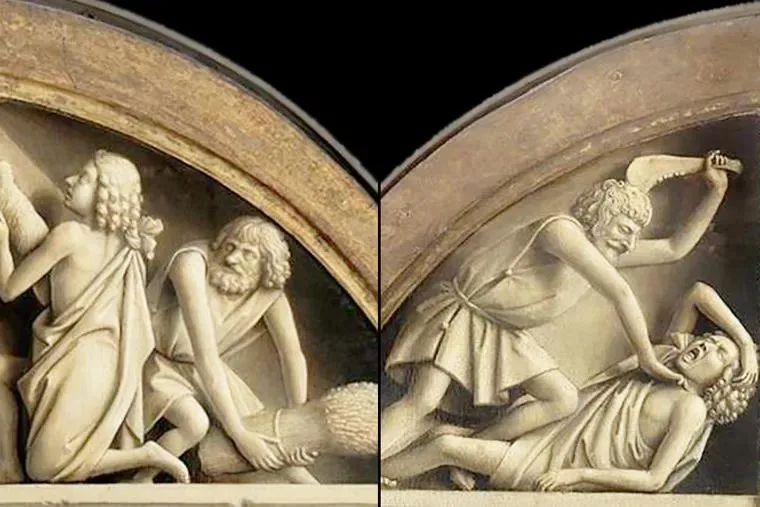
Sermon on the Mount (10): Murder of the Heart
In the Sermon on the Mount, Jesus teaches with a kind of authority the world had never heard. Instead of repeating religious tradition, He goes deeper—cutting straight to the heart. In Matthew 5:21–30, He challenges His followers to understand the Law not merely as a list of rules, but as a call to inner righteousness. Jesus raises the standard—not to weigh us down, but to show us our need for transformation through the Spirit.
This portion of the Sermon on the Mount focuses on two of the Ten Commandments: the sixth, “You shall not murder,” and the seventh, “You shall not commit adultery.” But Jesus doesn’t stop with the outward actions. He teaches that anger and lust—unseen thoughts and desires—are just as serious in the eyes of God.
Jesus begins by saying, “You have heard that it was said, ‘You shall not murder.’” But then He adds, “But I say to you…” This phrase is key to understanding Jesus’ teaching. He isn’t canceling the Law. Instead, He’s revealing its true intent. The religious leaders of the time had reduced God’s commands to a checklist of external behaviors. As long as you didn’t kill anyone or commit adultery, you were considered righteous.
But Jesus says that the Law was always meant to address more than behavior. It was about the heart.
When Jesus teaches that anger is as serious as murder, He’s not exaggerating. He’s showing us that the heart behind the action matters just as much as the action itself. If we harbor hatred, bitterness, or contempt, we are already guilty in God’s eyes.
Jesus gives practical teaching on how to deal with anger. If you’re offering a gift at the altar and remember that someone has something against you, stop what you’re doing. Go and make things right and then return to offer your gift. In other words, God cares more about our relationships than our rituals.
This challenges us to think differently about worship. Worship is not just singing or listening to a sermon. It includes how we treat others. If there’s unresolved conflict in your life, Jesus says to deal with it immediately. Don’t let it sit. Anger that simmers beneath the surface will eventually boil over—and damage not only others but your own soul.
Ephesians 4:26–27 echoes this teaching: “Be angry and do not sin; do not let the sun go down on your anger, and do not give the devil an opportunity.” Anger isn’t always sinful—but when we let it grow unchecked, it becomes a foothold for the enemy. That’s why Jesus calls us to seek reconciliation, and to do it quickly.
Jesus goes even further. He warns against calling someone “Raca” or “You fool.” These were insults in His day, meant to demean a person’s intelligence or character. Jesus is pointing to the destructive power of our words—and how they reveal the condition of our hearts.
Calling someone a fool might not seem like a big deal, but Jesus says it makes us “guilty enough to go into the fiery hell.” That may sound extreme, but again, Jesus is using strong language to show how serious God is about our internal life. We might not kill someone with our hands, but we can kill their spirit with our words. And those words come from the heart.
Jesus gives a vivid example: if you’re in the middle of a worship service and realize you’ve wronged someone, stop. Leave the service. Go and make things right. Then come back.
Why does Jesus say this? Because our relationship with God cannot be separated from our relationship with others. We cannot claim to worship God while ignoring a brother or sister we’ve hurt. Reconciliation is part of worship. God isn’t interested in empty religious performance—He wants hearts that seek peace.
After dealing with anger and contempt, Jesus turns to the seventh commandment: “You shall not commit adultery.” Again, He goes deeper than outward behavior: “Everyone who looks at a woman to lust for her has already committed adultery with her in his heart.”
Lust is a heart issue. It begins with the eyes but quickly moves to the imagination. And when we allow those thoughts to take root, they begin to shape our desires and decisions. Jesus isn’t saying that noticing someone’s beauty is a sin—but He draws a clear line between appreciation and lust. We know the difference.
In Job 31:1, Job says, “I have made a covenant with my eyes; how then could I gaze at a virgin?” Job understood the power of the eyes—and the need to guard them. In today’s world, this is more important than ever. With nearly unlimited access to immoral content, we must keep a moral guard—what I call a sentry—posted at the gate of our imagination.
Jesus uses some of His strongest language in this passage: “If your right eye causes you to stumble, tear it out… If your right hand causes you to stumble, cut it off.” These are not literal commands to harm ourselves. Jesus is using hyperbole—a common teaching method in the Jewish tradition—to make a point: take sin seriously. Don’t play games with it.
The issue here is mortification—putting sin to death—rather than mutilation. Paul talks about this in Romans 8:13: “If by the Spirit you are putting to death the deeds of the body, you will live.” The goal is not self-harm but self-discipline—empowered by the Holy Spirit.
If something causes you to sin, remove it from your life. That could mean setting boundaries with media, friendships, or environments. It could mean limiting your exposure to tempting situations or conversations. The point is this: take action before temptation becomes destruction.
Jesus teaches that it’s better to lose something valuable—like a hand or an eye—than to risk losing everything. He’s reminding us to value the eternal over the temporary. Purity is more important than comfort. Holiness is worth any cost.
This is a hard word in our culture, which often tells us to follow our desires, not restrain them. But Jesus is clear: don’t presume on the grace of God. Just because judgment doesn’t come immediately doesn’t mean it won’t come at all.
Ecclesiastes 8:11 says, “Because the sentence against an evil deed is not executed quickly, the hearts of men are given fully to do evil.” We might think we’re getting away with sin, but God sees. He is patient, but He is also just.
One of the most important truths we can grasp from this passage is that we cannot live this kind of life in our own strength. We need the Spirit of God to change us from the inside out. Jesus didn’t give these commands so we would try harder—He gave them to show us our need for grace and transformation.
As we walk by the Spirit, we begin to desire what God desires. We learn to see others not as objects but as image-bearers. We stop justifying our anger and start seeking reconciliation. We stop entertaining lust and begin pursuing purity.
The flesh doesn’t go away. It doesn’t improve. But we don’t have to walk in it anymore. We’ve been given a new power—the life of Christ within us. And as we live by His Spirit, we become more and more like Him.
Jesus’ teaching in Matthew 5:21–30 is not easy—but it is good. It’s good because it calls us to something higher than empty religion. It calls us to real righteousness. It reminds us that God sees not only what we do, but who we are inside. And it assures us that through the Spirit, we can become the kind of people God designed us to be.
This is the heart of the Christian life—not just avoiding sin, but becoming more like Christ. And that begins not with effort, but with surrender. Not with trying harder, but with trusting deeper. Jesus doesn’t just reveal the standard—He empowers us to live it through His Spirit.
Let us then walk in humility, aware of our need, and full of gratitude for His grace. For what He commands, He also enables. And what He reveals, He redeems.
To explore the Sermon on the Mount more deeply and discover how to thoughtfully answer the questions below, subscribe to Ken Boa Reflections on Substack.
Questions for Reflection
- Where have I allowed anger or contempt to linger in my heart, and how might that be affecting my relationship with God and others?
- Do I take the inner life of my thoughts and desires as seriously as my outward actions?
- Am I willing to act decisively to remove sources of temptation, even when it costs me comfort or convenience?
- Have I mistaken external religion for inward righteousness, and how can I invite the Spirit to shape me from the inside out?