
The Christian faith is built on many beautiful truths, but none is more mysterious or more life-changing than the Incarnation. It is the heart of the gospel and the greatest surprise in history—that the God who made everything chose to enter into His own creation as a human being. This miracle is not just something to study, but something to worship and marvel at.
What do we mean when we talk about the Incarnation? The word itself comes from Latin, meaning “in the flesh.” It refers to the moment in history when Jesus Christ, the eternal Son of God, took on human nature and was born into the world. He was not merely a spiritual figure or a divine visitor. He became a real man, with a real body, a real mind, and real emotions.
A Worldview Like No Other
In today’s world, we’re surrounded by many different spiritual beliefs. Some say that all religions are basically the same, offering similar paths to God or spiritual peace. But Christianity stands apart. It makes a claim no other religion dares to make: that God Himself became a human being and walked among us.
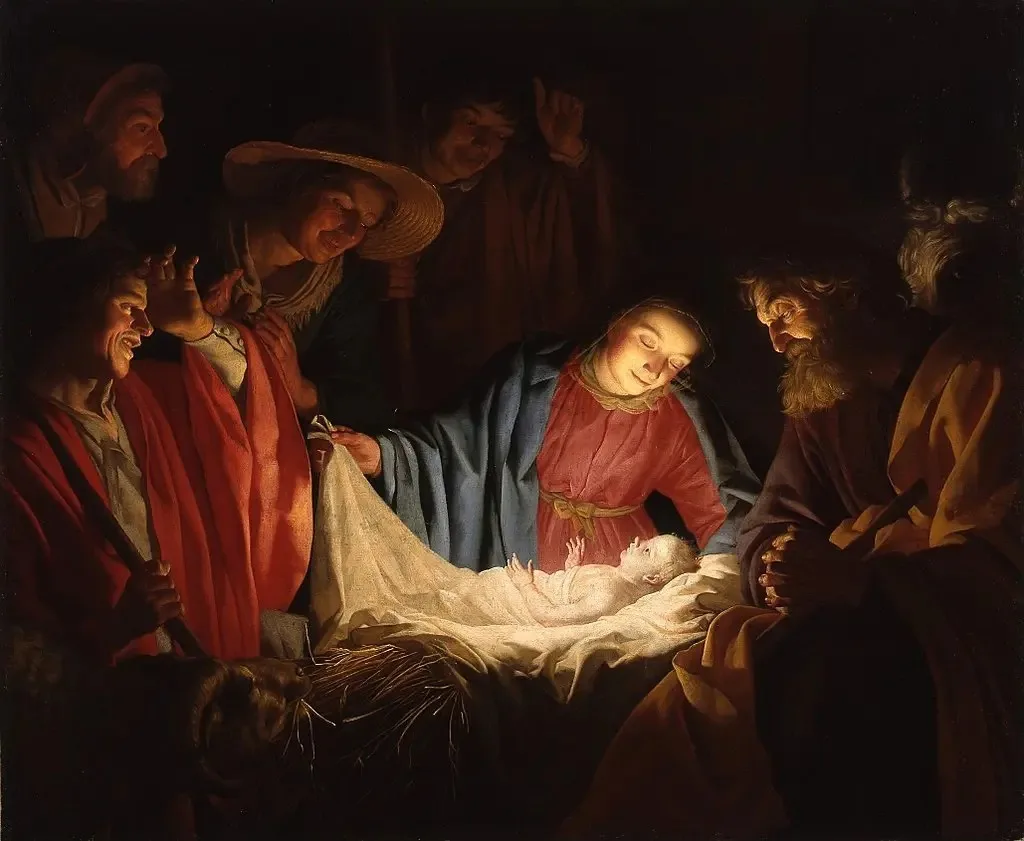
Who would have imagined that the infinite, all-powerful Creator of the universe would not only visit our world but do so in weakness—as a baby in a manger, born to a poor family in a forgotten corner of the Roman Empire? And yet, this is exactly what the Gospels tell us happened.
Jesus Christ is not just a great moral teacher or a religious prophet. He is the eternal Word through whom all things were made (John 1:1–3). And yet He chose to come in humility, not in splendor. He entered the world in vulnerability, not in strength.
The baby born in Bethlehem would grow up to be rejected by His own people, betrayed by His friends, mocked, beaten, and crucified. Yet through His suffering and death, He brought forgiveness, hope, and eternal life to those who believe in Him.
Fully God and Fully Human
The Bible clearly teaches that Jesus is both fully God and fully human. He is not part God and part man. He is not God pretending to be a man. He is truly and fully both at the same time. This is what makes the Incarnation such a mystery—and such a wonder.
As God, Jesus has all the attributes of divinity. He is eternal, all-powerful, all-knowing, and present everywhere. He claimed to be the “I AM” (John 8:58), the same name God gave to Moses at the burning bush. He said that to see Him is to see the Father (John 14:9), and that He and the Father are one (John 10:30).
As man, Jesus experienced every part of human life. He was born, grew up, got tired and hungry, felt joy and sadness. He knew what it was to be tempted, but He never sinned. Hebrews 4:15 tells us that He was “tempted in every way, just as we are—yet without sin.” He understands what we go through. He has walked where we walk.
This union of divinity and humanity in one Person is not something we can fully understand, but it is something we are called to believe. Jesus is the bridge between heaven and earth. He alone is able to bring us back to God because He is both God and man.
Why Did God Become a Man?
This leads us to an important question: Why did God become a man? Why did the eternal Word put on human flesh?
The answer is simple, yet profound: love.
God came to us in the person of Jesus Christ to bring us back into relationship with Himself. Sin had broken that relationship, and no amount of effort or religion could fix it. Only God could make it right. And so He did. Jesus came to live the perfect life we could not live, and to die the death we deserved, so that we could be forgiven, adopted, and made new.
Philippians 2 tells us that Jesus “emptied Himself” and took on the form of a servant, becoming obedient to the point of death—even death on a cross. This humility was not a loss of His divine nature, but the laying aside of His privileges. He added humanity to His divinity so that He could truly live among us.
The Cost and the Glory
It’s easy to focus on the joy of Christmas without reflecting on the cost of the Incarnation. For Jesus, becoming human meant stepping into a world of pain, brokenness, and rejection. He did not stay distant or detached. He entered into our mess. He bore our griefs. He carried our sorrows (Isaiah 53:4).
The cross was not a tragic end to His life—it was the reason He came. The cradle in Bethlehem was always pointing toward the cross on Calvary. And the cross, in turn, leads us to the empty tomb. Jesus not only died for our sins, but He rose from the grave, conquering death and offering eternal life to all who believe in Him.
The Incarnation reminds us that God is not far away. He is near. He understands. He saves.
Living in Light of the Incarnation
How should we respond to this incredible truth?
First, with worship. When we think about the humility and love of Christ, our hearts should be filled with awe. We cannot fully understand the Incarnation, but we can kneel before it in wonder and gratitude.
Second, with trust. The fact that God came in person to rescue us means we can trust Him completely. He knows what it is to suffer. He knows what it is to be rejected, to be alone, to face death. Whatever we are going through, He has been there. And He promises never to leave us.
Third, with obedience. Jesus came not just to save us, but to change us. As followers of Christ, we are called to become more like Him. The One who humbled Himself for our sake now invites us to live lives marked by humility, service, and love.
Finally, with hope. The Incarnation is not just about the past; it also points to the future. Jesus came once, but He is coming again. And when He returns, He will make all things new. The same Jesus who walked this earth in human flesh will one day return in glory, and we will see Him face to face.
The Incarnation is a mystery we will never fully grasp. But it is also a truth that changes everything. God became one of us so that we could become one with Him. The Creator stepped into creation. The Author wrote Himself into the story. The King wore a crown of thorns so we could wear a crown of life.
This is the mystery of the Incarnation. Let us never take it for granted. Let us live in its light.