
As we move from Matthew 5 to Matthew 6, Jesus transitions from a focus on inner righteousness to outward expressions of devotion. He speaks about giving, prayer, and fasting—central spiritual practices—but warns us that even good practices can be corrupted by self-centered motives. If we give, pray, or fast to gain approval, we have already received our reward in full, and not from God.
In particular, Jesus addresses prayer, not to prohibit public prayer, but to redirect our attention toward intimate communion with the Father. Prayer is not a performance. Jesus tells us to pray in secret, in the quiet of the inner room, where only God sees. This is the space where our hearts are laid bare, not to impress others, but to seek God alone.
Jesus critiques the religious habit of praying to be seen and admired. Public displays of piety in His day were applauded, and some used prayer as a stage. But prayer is not a show—it is an act of dependence. It humbles us, reminding us that we are vessels in need of direction from the Living God.
Hebrews 4 reminds us that we may come boldly before the throne of grace, not because we are worthy, but because Christ, our High Priest, has made the way. Prayer is not a spiritual achievement—it is a gift. It is our privilege to approach the Father, through the Son, empowered by the Holy Spirit.
After warning against hypocritical prayer, Jesus goes on to address another danger: meaningless repetition. He says, “When you are praying, do not use meaningless repetition, as the Gentiles do, for they suppose they will be heard for their many words” (Matt. 6:7). The Greek term battologeo implies babbling or empty repetition. In many religious traditions, lengthy or formulaic prayers were believed to manipulate divine favor. But our God is not impressed by word count.
Jesus is not condemning repeated prayers—He Himself taught persistence—but He warns against disengaged, thoughtless recitation. We must not merely say our prayers; we must pray them. The danger of empty words is not limited to other religions—it can show up in Christian life as well, whether in small groups, church liturgies, or private devotions. We must ask: Are we truly directing our hearts toward God?
Verse 8 says, “Your Father knows what you need before you ask Him.” If that is so, why pray? Because prayer is not about informing God but about transforming us. It shapes our hearts, refines our desires, and draws us into deeper dependence.
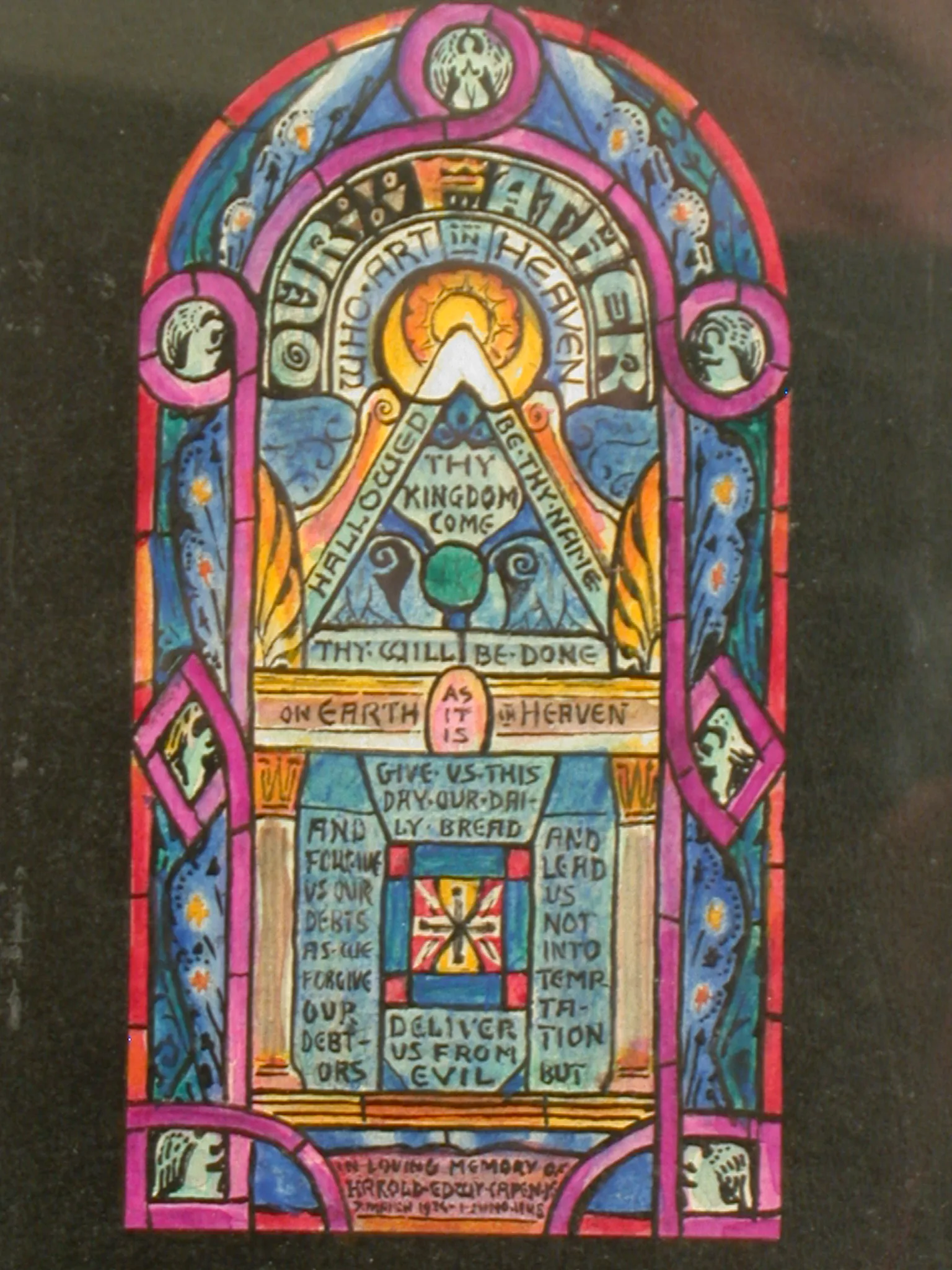
Jesus then provides a model: the Lord’s Prayer. It is both a prayer we can recite and a framework for shaping our communion with God. It begins with the divine and ends with human needs. The first petitions are vertical: “Our Father who art in heaven, hallowed be Thy name. Thy kingdom come. Thy will be done.” The prayer begins not with us, but with God’s name, His reign, and His will. It orients our hearts to what matters most.
Then it moves to horizontal petitions: “Give us this day our daily bread. Forgive us our debts. Lead us not into temptation.” Only after we acknowledge who God is do we rightly bring our needs before Him.
John Calvin noted that this structure parallels the Ten Commandments: the first four deal with God, the next six with our neighbors. Likewise, the Lord’s Prayer teaches us that a rightly ordered life begins with a rightly ordered heart—one that seeks God first.
When Jesus says, “Our Father,” He invites us into shared sonship. We are not alone; we are part of a covenant family. And when He says “who art in heaven,” He reminds us that our Father is both loving and sovereign. He has the desire to act for our good—and the power to do so. He is personal, not abstract. In a world that often equates personhood with weakness, Jesus shows us a God who is fully personal and perfectly holy.
To say, “Hallowed be Thy name” is to desire that God’s character be honored in our lives and in the world. It is not only a reverent phrase—it is a petition that our lives would reflect His holiness. Moses once pleaded with God to spare Israel for the sake of His name. How often do we have that kind of concern for God’s reputation?
This prayer reorients us from the tyranny of self. In our natural state, we long for our name to be exalted, our kingdom to expand, our will to be done. But Jesus calls us to re-center our lives around God’s name, God’s kingdom, and God’s will. That is the path of true freedom.
Only after our hearts are aligned with God’s purposes are we prepared to bring our needs to Him. “Give us this day our daily bread” is a prayer for provision, not abundance. It echoes the Israelites receiving manna in the wilderness—a lesson in daily trust.
“Forgive us our debts, as we also have forgiven our debtors” speaks to our need for grace and our responsibility to extend it. Receiving God’s forgiveness obligates us to walk in grace toward others. Forgiveness is not optional in the kingdom—it is its very currency.
“Lead us not into temptation, but deliver us from evil.” We ask for protection from both external threats and internal weaknesses. This is a humble confession of our need for God’s guidance and strength in a fallen world.
In the end, the Lord’s Prayer is not just a model for how to pray—it is a model for how to live. It shapes our priorities, reforms our desires, and anchors our identity in God. When prayer becomes a daily rhythm, it reshapes us. We begin to reflect the holiness of the One we address. We find security in His love and power. And from that secure place, we live with boldness, humility, and joy.
To explore the Sermon on the Mount more deeply and discover how to thoughtfully answer the questions below, subscribe to Ken Boa Reflections on Substack.
Questions for Reflection
- When I pray, do I begin by focusing on God’s name, kingdom, and will—or do I tend to start with my own needs and concerns?
- How does viewing God as both personal (our loving Father) and sovereign (the Lord of heaven) reshape the way I approach Him in prayer?
- In what ways am I tempted to seek the exaltation of my own name, the expansion of my own kingdom, and the fulfillment of my own will rather than God’s?
- How might practicing the Lord’s Prayer daily help me realign my heart—shifting from self-centered desires toward trust, dependence, and obedience to God’s purposes?