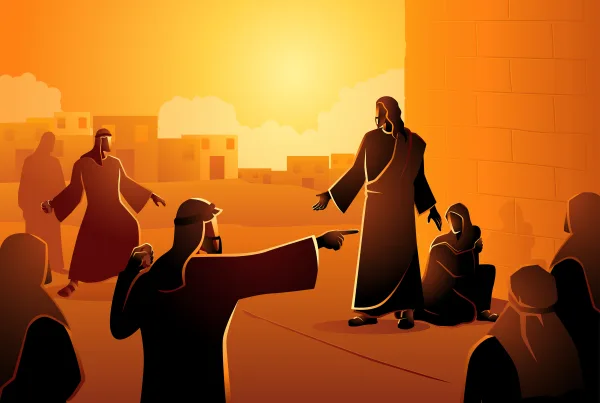


In Matthew 6, Jesus shifts from inner devotion to outward living. He has just warned against practicing righteousness to gain human recognition in giving, prayer, and fasting. Now He addresses a broader danger: the pull of materialism. At its heart, His message is simple—we cannot live for two audiences. We cannot serve both God and man.
When we seek applause, we may gain it, but that is all we receive. If we live for God’s approval, however, the reward is eternal. Humility always points to secrecy. The truly humble do not need to draw attention. Even when recognized, they acknowledge that all good things come from God. Yet our hearts are subtle. We may act humbly but still crave hidden praise. If we waited until our motives were pure, we would never act. The better question is this: Am I more concerned for God’s glory than my own reputation?
This is why Jesus anchors us in the Lord’s Prayer. It begins not with our needs but with God’s glory: “Hallowed be Your name, Your kingdom come, Your will be done.” To be jealous for His reputation, ambitious for His glory, and passionate for His pleasure is to align our desires with His purposes. But faith is tested in real life. We wonder if God is truly in control, if He really seeks our best. Trust means clinging to the truth that God is both great and good, even when circumstances tempt us to doubt.
With verse 19, Jesus moves to practical concerns: food, clothing, housing, and ambition. “Do not store up for yourselves treasures on earth, where moth and rust destroy, and where thieves break in and steal. But store up for yourselves treasures in heaven… for where your treasure is, there your heart will be also.”
In first-century Palestine, wealth was fragile. Extra clothing was considered wealth, but moths could destroy it. Food could be stored, but rats and insects ruined it. Even if possessions survived, death would strip them away. Job reminds us: “Naked I came from my mother’s womb, and naked I shall return” (Job 1:21). Everything is a gift, and God has the right to give and take away.
The danger is that abundance raises expectations. The more we receive, the more we expect. When provision decreases, we feel deprived—even if we still have more than most people in history. Paul counters this in 1 Timothy 6:7–8: “We have brought nothing into the world, so we cannot take anything out of it either. If we have food and covering, with these we shall be content.” Yet contentment is rare in a culture built on dissatisfaction. Advertisers stoke constant craving. Gratitude, however, is the biblical antidote. Contentment flows from amazement that God has given us so much.
Jesus’ warning is not a rejection of possessions themselves. Scripture commends providing for one’s household (1 Timothy 5:8), planning wisely, and enjoying what God gives (1 Timothy 4:4–5; 6:17). The issue is not ownership but trust. Wealth tempts us to pride and false security. It whispers, “You are in control.” Paul warns against being “conceited” or setting hope on “the uncertainty of riches” (1 Timothy 6:17). Earthly wealth cannot secure eternity.
Instead, Paul instructs the wealthy “to do good, to be rich in good works, to be generous and ready to share” (1 Timothy 6:18). In this way they store up true treasure—a foundation for the future. Real riches are not possessions but generosity, kindness, and love. These endure beyond death.
Moses gave the same warning to Israel in Deuteronomy 8. In prosperity, they might forget God and claim, “My power made me this wealth.” But wealth is always God’s gift. To forget Him is to embrace the delusion of self-sufficiency.
What, then, are treasures in heaven? At the very least, they are qualities like gratitude, contentment, and freedom from comparison. More deeply, they are the eternal consequences of how we steward God’s gifts—our time, talent, treasure, truth, and relationships. Every resource can either feed self-indulgence or advance God’s kingdom. When we build truth into relationships, serve others, and share the gospel, we invest in treasures that last. When we live only for ourselves, our reward ends with this life.
Jesus presses the question: What do you hunger for most? What is your ambition? Possessions satisfy only for a season, and they create an appetite for more. But heavenly treasures grow richer with time, shaping us for eternity.
He concludes: “For where your treasure is, there your heart will be also.” Our hearts follow our treasures. Earthly treasure ties us to what is fleeting. Heavenly treasure draws us upward to what endures. Peter echoes this in 2 Peter 1:5–8, urging believers to cultivate faith, virtue, knowledge, self-control, perseverance, godliness, brotherly kindness, and love. These qualities are treasures that never fade.
In the end, the issue is not whether we will treasure something, but where. Earthly treasure fades. Heavenly treasure endures. Earthly treasure puffs up pride. Heavenly treasure produces humility and joy. Earthly treasure dies with us. Heavenly treasure prepares us for life indeed.
The question remains: Which treasure are you pursuing?
To explore the Sermon on the Mount more deeply and discover how to thoughtfully answer the questions below, subscribe to Ken Boa Reflections on Substack.
Questions for Reflection
- What do your spending habits, goals, and daily choices reveal about where your treasure truly lies?
- How can you practice greater gratitude and contentment in a culture that constantly urges dissatisfaction?
- In what ways might you be tempted to place your security or identity in possessions rather than in God’s provision?
- How can you begin to invest more intentionally in “treasures in heaven”—through generosity, relationships, and kingdom work?