

In Matthew 6, Jesus calls us to a radically different way of thinking—a shift from the temporal to the eternal, from cultural norms to kingdom values. He doesn’t simply offer moral advice; He challenges the very foundation of our lives. His contrasts—between treasures, masters, and preoccupations—are not rhetorical devices; they are invitations to reorient our hearts.
The first contrast Jesus gives is between two treasures: one on earth and one in heaven. Earthly treasure is temporary, corruptible, and fragile. Heavenly treasure is lasting, secure, and incorruptible. Jesus appeals to both logic and faith. If God is real and our lives are eternal, then why would we anchor our identity in what we cannot keep? Why give our days, energy, and attention to things that rot, rust, or are stolen?
Jesus is not condemning wealth. He is confronting illusion—the idea that our worth is tied to our possessions. When we cling to what fades, we fade with it. But when we invest in what lasts—Christlike character, relationships, and Spirit-empowered service—we participate in what echoes into eternity.
Jesus then shifts to the subject of worry, repeating three times in Matthew 6: “Do not worry.” He addresses the common anxieties of life: food, clothing, the future. These are real concerns, but they become destructive when they dominate our thoughts. Worry does not add to our lives—it subtracts. It robs us of peace, distracts us from purpose, and undermines our trust in God.
The cultural script tells us that worry is responsible—that constant concern proves we’re engaged and prepared. But Jesus offers a better way. He invites us to consider the birds and the lilies—not as symbols of passivity, but as examples of provision without panic. Nature plans and prepares, but it does not obsess. God provides. And if He cares for flowers that are here today and gone tomorrow, how much more will He care for you?
We live in a world saturated with fear. Media, marketing, and even casual conversation tend to amplify threats and uncertainties. If we feed on this, we will live in a constant state of anxiety. But we are not called to paranoia—we are called to peace. And peace comes not from controlling outcomes but from trusting the One who already knows the end from the beginning.
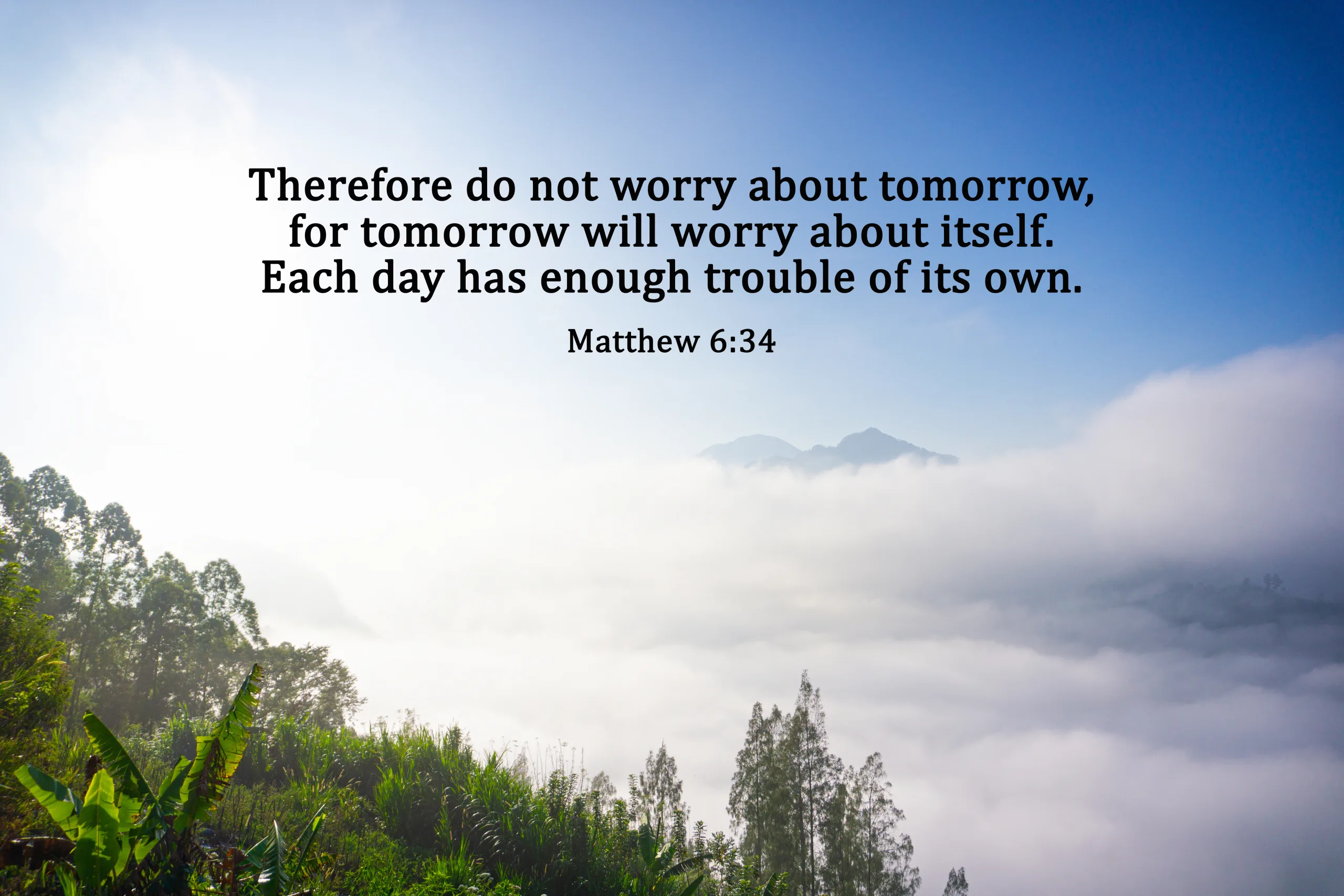
Jesus is not asking us to stop thinking about the future. Planning is wise. What He warns against is preoccupation—the kind of anxious control that reveals distrust. The wise person lives fully in the present while trusting God with tomorrow. Each day has enough trouble of its own, He says. Why multiply it by carrying the weight of days not yet lived?
Even our ambitions need reexamination. God made us for purpose, not passivity. Ambition is not the enemy—misplaced ambition is. Our deepest desires—to matter, to create, to build—are not wrong. But they must be directed toward the eternal. Are we investing our lives in what will endure or in what will fade?
Jesus reminds us, “The Gentiles eagerly seek all these things” (Matthew 6:32). The world chases survival and significance through possessions, appearance, and control. But these pursuits do not suit children of the King. They are beneath the dignity of those made in God’s image and redeemed for His purposes.
The problem isn’t effort—it’s orientation. Two people can perform the same task—saving, planning, striving—yet one does it in faith, the other in fear. Outwardly similar, inwardly worlds apart. God sees the heart.
In Mark 4, Jesus describes those who hear the Word but become unfruitful because of three thorns: the worries of the world, the deceitfulness of wealth, and the desires for other things. These are the same forces He warns of in Matthew 6. Anxiety, affluence, and appetite—if left unchecked—choke out spiritual vitality. They divide the heart and dull our longing for the eternal.
What is the remedy? “Seek first the kingdom of God and His righteousness, and all these things will be added to you” (Matthew 6:33). This is not a call to neglect your responsibilities. It is a call to reorder your loves—to put first what truly matters. When we trust the Giver above the gifts, we find rest, not restlessness.
We were made not just to endure, but to thrive—to live as eternal beings in a temporary world. This requires single-minded devotion, not divided ambition. It means living wisely, but with radical trust. Planning well, but holding the outcomes loosely. Striving for excellence, but anchoring our identity in Christ, not our performance.
Take stock of your life. What are you chasing? What are you worried about? What is shaping your ambition? You will be preoccupied with something. The question is whether your preoccupation is worthy of your calling in Christ.
Let us be different. Let us be people of eternal perspective—those who live in time but are shaped by eternity.
To explore the Sermon on the Mount more deeply and discover how to thoughtfully answer the questions below, subscribe to Ken Boa Reflections on Substack.
Questions for Reflection
- What is shaping your sense of identity—God’s truth or the culture around you? Are you allowing your value to be defined by your performance, possessions, or appearance? Or are you grounded in the dignity, destiny, and identity you’ve received in Christ? How does that identity influence the way you live today?
- What are you most frequently preoccupied with—and is it worthy of your calling in Christ? Jesus says, “Do not worry about your life…” (Matthew 6:25). What concerns dominate your thoughts on a daily basis? Are they worthy of someone made in the image of God and destined for eternal life?
- Are you living by trust or by control? Consider how you respond to uncertainty. Do you find yourself trying to control the outcomes of your life, or are you learning to entrust each hour to the God who holds your future? What practices could help you cultivate trust rather than anxiety?
- Are your ambitions shaped by the kingdom of God or the kingdom of self? Jesus invites us to “seek first the kingdom of God and His righteousness” (Matthew 6:33). What does that look like in your current season of life? How can you reorient your goals and desires to reflect God’s purposes, not merely personal gain?