

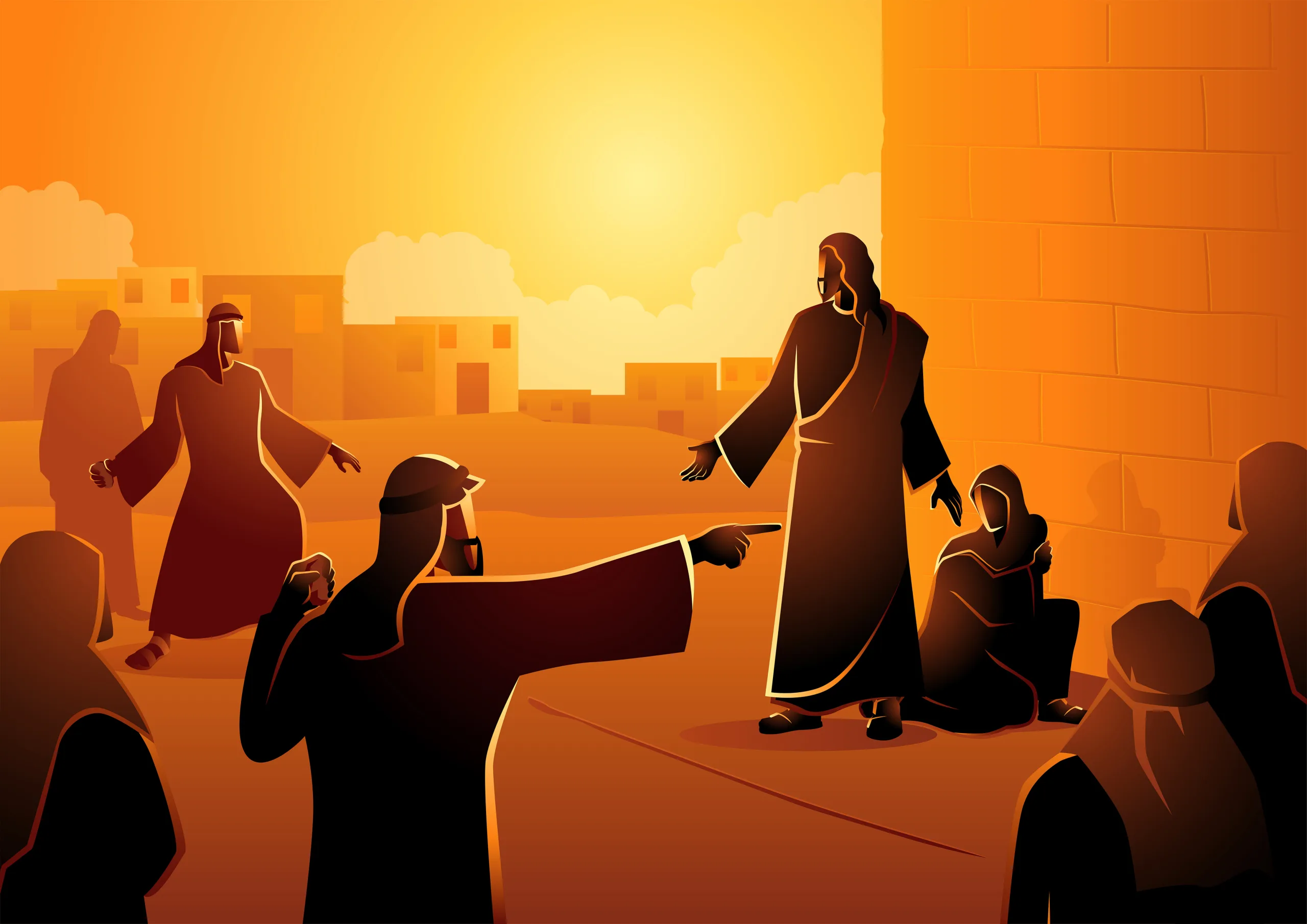
In Matthew 7:1–5, Jesus says, “Do not judge so that you will not be judged.” This verse has become one of the most quoted—and most misapplied—texts in all of Scripture. Often misunderstood as a call to moral passivity or the suspension of discernment, Jesus’ actual intent is far deeper. He is calling us not to a lack of judgment, but to a different kind of judgment—one rooted in humility, grace, and self-awareness.
Throughout the Sermon on the Mount, Jesus presents a radical vision of kingdom life. He calls us to be fundamentally different: in character (the Beatitudes), in influence (the Similitudes), in righteousness, devotion, and ambition. Now in chapter seven, He turns to our relationships with others. And the first relationship He addresses is that between “brothers”—fellow members of the body of Christ.
At the heart of this teaching lies a profound understanding of the human condition. Though redeemed, we still bear the remnants of our fallenness. The apostle Paul calls this residual force “the flesh”—the capacity for sin that lingers in our mortal bodies. Augustine described the human journey in four movements: before the fall, man was able not to sin; after the fall, he was not able not to sin; in Christ, we are able not to sin; and in our glorified state, we will be not able to sin. For now, we live in that third reality—empowered by the Spirit, yet still engaged in daily struggle.
Because of this, we will stumble in many ways. And so will others. The question then becomes: how do we respond when fellow believers fall short? How do we relate to others in a way that reflects the grace we’ve received?
Jesus provides a three-fold answer. First, we are not to judge in a condemning, self-righteous way. Second, we are not to be hypocrites—blind to our own faults. And third, we are to treat others as brothers, seeking their good and restoration rather than their shame or punishment.
Let us be clear: Jesus is not forbidding discernment. In fact, He commands it. Later in this very chapter, He warns us not to give what is holy to dogs or cast pearls before swine (v. 6), and to beware of false prophets (v. 15). These warnings require careful, spiritual discernment.
The problem arises when discernment turns into condemnation—when we elevate ourselves as moral judges of others’ motives and hearts. This censorious attitude assumes a place that belongs only to God. As Paul writes, “Who are you to judge the servant of another? To his own master he stands or falls” (Romans 14:4). And again, “In that which you judge another, you condemn yourself; for you who judge practice the same things” (Romans 2:1).
We must remember: the more discernment we’re given, the greater the temptation to misuse it. Oswald Chambers wisely said, “God gives us the ability to discern, not so that we may condemn, but so that we may intercede.” Our calling is not to become censors of others, but intercessors for them.
This requires walking by the Spirit, for only then can we thread the narrow path between naivety and condemnation. Without the Spirit’s guidance, we either fail to judge rightly, or we judge harshly. The spiritual life often requires this kind of fine balance—knowing when to speak, when to be silent, when to correct, and when to simply pray.
The apostle Paul demonstrates this kind of humility in 1 Corinthians 4. He writes, “I am conscious of nothing against myself, yet I am not by this acquitted; but the one who examines me is the Lord” (v. 4). Even when his conscience is clear, Paul acknowledges that only God can fully judge motives. Therefore, he warns, “Do not go on passing judgment before the time, but wait until the Lord comes… then each man’s praise will come to him from God” (v. 5).
While we may rightly reject false teaching or immoral behavior, we must refrain from attributing motives we cannot see. Yes, we may condemn actions, but we must not condemn hearts. God alone knows the hidden things. When we pass sentence on someone’s inner intentions, we usurp divine authority.
Additionally, we must remember that to place ourselves in the seat of judgment is to invite that same standard upon ourselves. Jesus warns, “For in the way you judge, you will be judged; and by your standard of measure, it will be measured to you” (Matthew 7:2). That principle should humble us quickly. We cannot claim authority to judge others and then plead ignorance when held to the same measure.
Practically speaking, the spirit of judgment often manifests in subtle ways: in condescension, sarcasm, gossip, or an ungracious tone. These are not fruits of the Spirit. They reveal an attitude that forgets how much grace we ourselves require. The deeper truth is this: often what we criticize most fiercely in others is a projection of what we dislike in ourselves.
So how do we proceed?
Jesus’ answer is simple yet profound: first remove the log from your own eye. Self-examination must always precede correction. Only when we are acutely aware of our own flaws can we rightly help others with theirs. Humility is the precondition for loving correction.
And behind it all is this great mystery: The One who knows you best, loves you most. Christ sees every motive, every failure, every hidden sin—and yet He loves you with an everlasting love. If that is how He has treated you, how can you withhold grace from others?
This is not a call to blindness, but to generosity. It is not a denial of truth, but a devotion to grace. God calls us to grow in discernment, so that we may distinguish between the spirit of truth and the spirit of error (1 John 4:6). But He also calls us to use that discernment for prayer, not pride—for intercession, not accusation.
In every relationship, especially among believers, our goal should be restoration, not punishment; clarity, not condemnation. Let us judge rightly, but let us do so as those who know our own need for mercy.
In the end, Jesus is not telling us to cease being human by suspending our critical faculties. He is inviting us to be more human—by relinquishing the ambition to be God. He is not calling us to be blind, but to see with compassion. To see truth clearly, and then to season it with grace.
So let us speak truth—but always with humility. Let us correct—but with compassion. Let us judge actions—but never souls. And let us walk in the Spirit, knowing that the narrow way is not just between good and evil, but between truth without love and love without truth.
That narrow way is the way of Christ—and it is the only way that leads to life.
To explore the Sermon on the Mount more deeply and discover how to thoughtfully answer the questions below, subscribe to Ken Boa Reflections on Substack.
Questions for Reflection
- In what ways am I tempted to judge others harshly, rather than discerning rightly with humility and compassion? Reflect on situations where your critical discernment may have shifted into condemnation. Ask the Spirit to reveal where pride, rather than love, may have shaped your response to others.
- Am I actively choosing to walk by the Spirit in my relationships, or am I slipping into flesh-based reactions? Consider your recent interactions—especially with fellow believers. Are you responding from your new nature in Christ, or from old patterns and unrenewed scripts?
- Do I use my discernment as a tool for intercession or as a weapon of self-righteousness? God gives discernment not to elevate us above others, but to lead us into deeper prayer and care for them. How might you shift from a posture of critique to one of intercessory love?
- How can I more fully extend to others the same grace God has lavished upon me? Christ knows you completely—and still loves you unconditionally. In what practical ways can you reflect that same generous grace in your relationships this week?