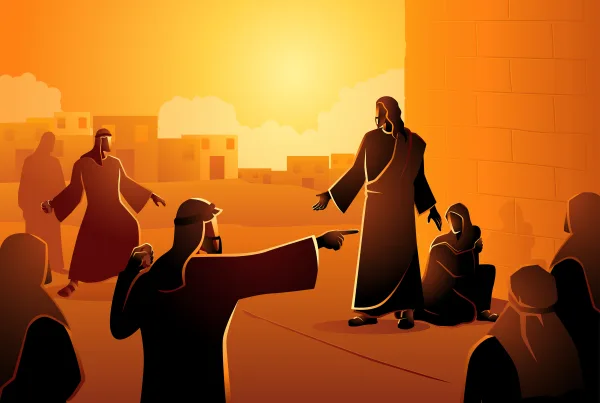


In the heart of the Sermon on the Mount, Jesus extends a profound and radical invitation: “Ask, and it will be given to you; seek, and you will find; knock, and it will be opened to you.” These are not empty promises. They flow from the very nature of God—a good and generous Father who delights in giving what is truly good to His children.
This teaching on prayer is nestled within a broader discourse on the righteousness of the kingdom—one that demands not only ethical behavior but transformation of the inner life. Jesus calls us not merely to follow rules, but to be conformed to His likeness. These standards—loving our enemies, practicing secret righteousness, laying up treasures in heaven—are not achievable through self-effort. They are impossible apart from grace.
This is the paradox: what God requires, He also provides. Through the indwelling life of Christ, we are empowered to live out what the Sermon demands. We are not called to strive in our strength but to surrender to His. The Christian life is not ultimately about performance, but about abiding. “Christ in you, the hope of glory” (Colossians 1:27) is not merely doctrinal—it is experiential. And it is this union with Christ that enables us to live righteously.
The fruit of the Spirit—love, joy, peace, patience, and more—is not manufactured by human will. It is the natural outgrowth of Christ’s life in us. As we rest in His sufficiency, we become less self-focused and more others-centered. Our lives begin to mirror the relational love of the Trinity—a communion of giving, serving, and delight.
Hell, in contrast, is the final state of self-centeredness—a soul utterly turned inward, incapable of love. Heaven is the fullness of love and communion. As Jesus says in John 14:20, “I am in My Father, and you in Me, and I in you.” This divine mutual indwelling is the mystery of the Christian life. And the door into that intimacy is prayer.
Prayer, then, is not a mechanical exercise or a spiritual transaction. It is communion with the living God. Hebrews 4:16 urges us to come boldly to the throne of grace—not as beggars before a reluctant deity, but as beloved children before a generous Father. Through the finished work of Christ, we are welcomed into the very presence of God.
Jesus tells us to “ask,” “seek,” and “knock.” These are present imperatives, implying continual action: keep asking, keep seeking, keep knocking. Persistence in prayer is not about pressuring God. It’s about drawing near to Him in trust. And it’s about learning to want not merely His gifts, but Himself.
Still, we must ask: are these promises absolute? Is Jesus offering us a blank check? No. He is not giving us a formula to get what we want. Rather, He is directing us to the goodness of the One we are asking. “Which of you, if his son asks for bread, will give him a stone?” Jesus asks. “If you then, being evil, know how to give good gifts… how much more will your Father in heaven give what is good to those who ask Him!” (Matthew 7:9–11).
Jesus is using a powerful argument from the lesser to the greater: if flawed human fathers can be trusted to provide for their children, how much more can we trust our heavenly Father? But note this: the emphasis is on receiving what is good—not necessarily what we asked for.
And that brings us to the real heart of the matter. Prayer is not about manipulating outcomes. It is about relationship. We come to a Father who sees more than we see and knows more than we know. We bring Him our honest desires, but we trust His perfect wisdom.
That trust is most tested in suffering. What of the parent who pleads for a child’s healing—and the healing doesn’t come? What of the long-held dream that remains unfulfilled? These are not abstract concerns. They cut deeply into the human experience. And yet, it is here that the foundation of prayer must be anchored—not in outcomes, but in the character of God.
God never promised to shield us from every sorrow. He did promise His presence. He did promise that nothing can separate us from His love (Romans 8:38–39). He did promise that all things—even the painful ones—will be used for our good and His glory (Romans 8:28–29).
The highest good is not a comfortable life, but a conformed life—being shaped into the image of Christ. And that shaping often comes through difficulty. As one author put it, “Sometimes God redeems us from suffering; other times, He redeems us through it.”
The story of Joni Eareckson Tada exemplifies this truth. Paralyzed as a teenager, she has lived more than four decades with chronic pain and increasing limitations. And yet, she testifies that she would not trade her suffering, because through it she has come to know Christ more deeply. Her wheelchair, she says, has become the tool of her sanctification.
This is redemptive suffering—not suffering for its own sake, but suffering that is transformed by grace. God does not waste our pain. He uses even evil for good. As with Joseph, who was betrayed by his brothers, we can say, “What man meant for evil, God meant for good” (Genesis 50:20).
But such a view of God requires trust. And trust is rooted in knowing who God truly is. Many struggle with the idea of God as Father, especially if their earthly fathers were absent, abusive, or indifferent. Yet Jesus invites us to redefine fatherhood in light of the perfect love of God—not the other way around.
The Father Jesus reveals is one who is near, who listens, who gives what is good. He is not quick to anger. He is not stingy with grace. He gave His only Son so that we might live. He withholds no good thing from those who walk with Him.
So when we ask, we ask in confidence—not in our prayers, but in His character. When we seek, we seek not merely answers, but intimacy. When we knock, we know the door will be opened—not because we are persistent, but because He is present.
Prayer is not primarily about getting things from God. It is about getting God Himself. And when we find Him, we find that He is enough.
To explore the Sermon on the Mount more deeply and discover how to thoughtfully answer the questions below, subscribe to Ken Boa Reflections on Substack.
Questions for Reflection
- When I pray, am I seeking God’s presence or simply His provision Consider how your prayer life reflects your desire for deeper intimacy with God rather than just answers to requests. What would it look like to pursue Him as the greatest gift?
- Do I trust God’s goodness even when He doesn’t give me what I ask for? Reflect on a time when God’s answer differed from your expectations. How might His “no” or “not yet” have been an expression of deeper love or greater wisdom?
- How do I respond when prayers seem unanswered? Do delays or silence lead you toward discouragement or deeper dependence? How might persistent prayer shape your heart more than it changes your circumstances?
- What does it mean for me to approach God as a child approaches a father? How have your experiences—whether positive or painful—with earthly father figures affected your image of God? What truths from Scripture can reshape that view?