

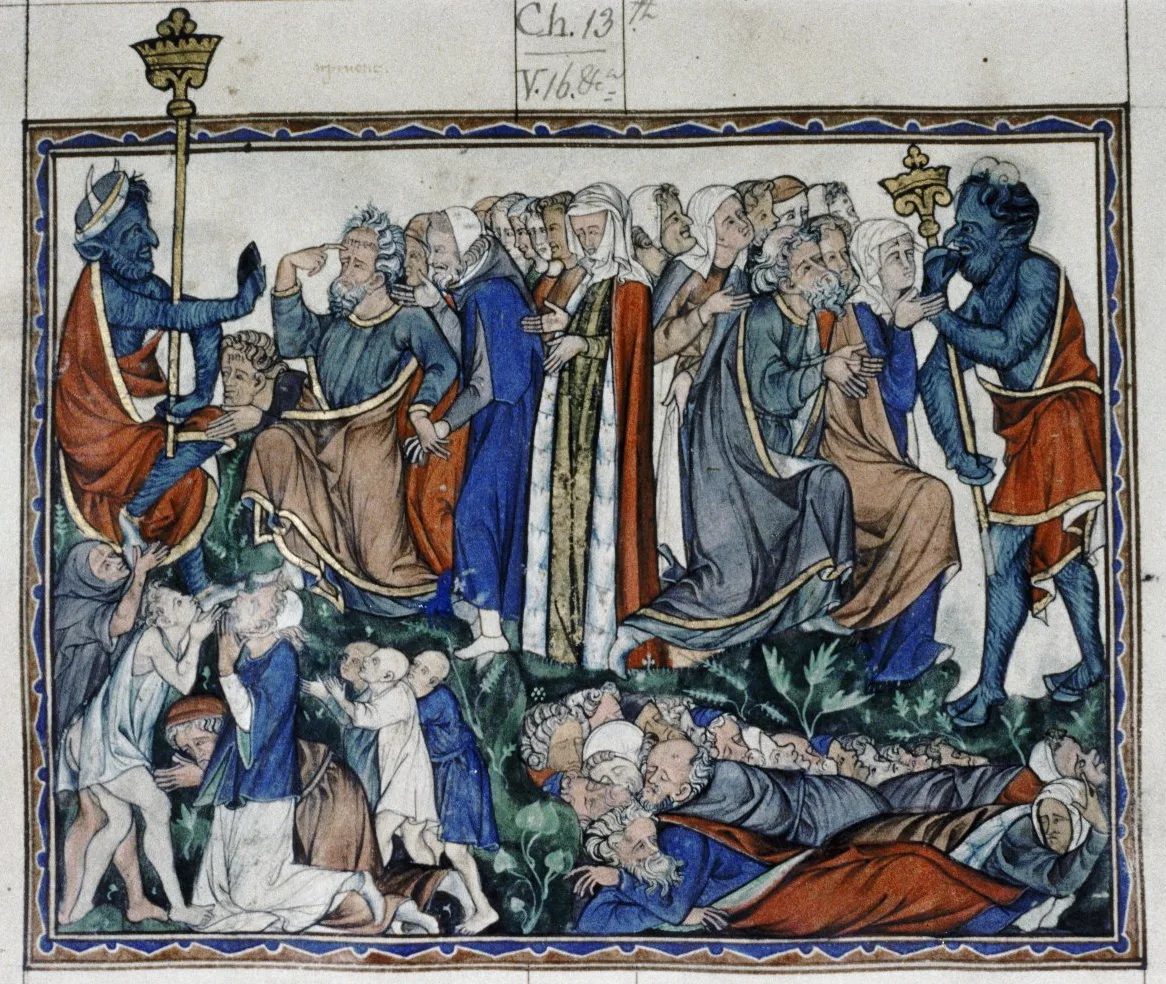
In the Sermon on the Mount, Jesus has already told us about two gates, two paths, two crowds, and two destinations. These images aren’t just poetic—they are urgent. Jesus is saying that every person must make a choice. To ignore this call is itself a decision. We are always choosing a direction, and Jesus urges us to think carefully about where our path leads. True wisdom, He tells us, involves looking past appearances to the ultimate outcome.
After teaching about the narrow and broad ways, Jesus gives another warning: “Beware of false prophets, who come to you in sheep’s clothing but inwardly are ravenous wolves. You will know them by their fruits. Grapes aren’t gathered from thorn bushes, nor figs from thistles, are they? So every good tree bears good fruit, but the bad tree bears bad fruit” (Matthew 7:15–17).
Jesus assumes here that false teachers exist—and He’s right. The Old Testament is filled with warnings about false prophets. Jeremiah, for example, constantly warns about those who speak their own words instead of God’s. The same is true in the New Testament. Nearly every letter addresses some form of false teaching, and books like Galatians, Jude, and 1 John were written specifically to confront dangerous errors.
Jesus says these false prophets look harmless. They seem kind, sincere, and even godly—like sheep. But inside, they are wolves. They use the right words but twist their meanings. They speak of love, light, and peace, but they redefine these terms to fit their own message. Their teachings may sound spiritual, but they quietly lead people away from the truth of Christ.
One example of this is A Course in Miracles, promoted by spiritual teacher Marianne Williamson. It uses Christian language but teaches ideas that oppose biblical truth. This is common among false teachers. They often sound Christian, using words like “God,” “grace,” or “Christ,” but they’ve rewritten the dictionary. We must be discerning. As Jesus says, you will know them by their fruits.
What does He mean by “fruit”? A teacher’s message and life will eventually reveal their true nature. Just as a tree is known by the fruit it bears, so a person is known by what their life and teaching produce. If their teaching leads to pride, confusion, immorality, or self-centeredness, that’s not from God. But if their message leads to humility, truth, love, and faith in Christ, that’s a sign of good fruit.
Jesus also tells us that “every tree that does not bear good fruit is cut down and thrown into the fire.” This is a strong warning. False teaching isn’t just a harmless mistake—it has eternal consequences. Truth matters. What we believe affects how we live, and how we live shapes our eternal destiny.
Jesus is also making another important assumption: there must be an objective standard of truth. If we’re going to recognize false teaching, there must be something solid to measure it against. But in our culture today, many people believe truth is personal. They say things like, “That’s true for you, but not for me.” This idea is a cornerstone of postmodern thinking.
But it doesn’t hold up in real life.
Try telling a bank that your balance is different from what their records show—“That may be true for you, but not for me.” Or try cutting in line and telling the person behind you that, in your truth, the rules don’t apply. These examples may seem humorous, but they reveal something important: people do believe in truth when it affects them personally. They appeal to justice, fairness, and accuracy when it matters to them.
So we should ask: why do people reject absolute truth when it comes to spiritual matters? Often, it’s because truth makes demands. If something is true, then the opposite is false. And if Jesus is the truth, then all other paths are not. That kind of claim feels narrow in today’s culture, but it is exactly what Jesus taught.
Jesus tells us to beware—to be alert, watchful, and discerning. False teachers don’t always look dangerous. But their message leads people away from the narrow road that leads to life. And in the days ahead, Scripture tells us this problem will only increase. As Jesus warned in Matthew 24, “Many false prophets will arise and mislead many.” We are already seeing this unfold today. The gospel is being preached across the world, but so is confusion and distortion.
Ironically, false teachers have helped the church define and defend the truth. Many of the core beliefs we hold today—the New Testament canon, the Nicene Creed, and the Apostles’ Creed—were clarified in response to heresies. False teaching forced the early church to draw clear lines between truth and error. And today, we are called to that same clarity.
Truth and error cannot both be right. Opposing ideas can’t be equally true. To think otherwise is to live in contradiction. As followers of Christ, we are called not only to believe the truth but to recognize and reject what is false. This requires spiritual discernment, anchored in Scripture and guided by the Holy Spirit.
Jesus’ warning about false prophets is not casual. It is serious, direct, and filled with purpose. He calls them “wolves in sheep’s clothing”—a powerful image that shows just how dangerous and deceptive they really are. These individuals don’t come with flashing signs to announce their falsehood. Instead, they blend in. They look like the real thing, but they carry a hidden threat.
Years ago, I wrote a book called Cults, World Religions, and You. The publisher later retitled it Cults, World Religions, and the Occult, which I appreciated. That book, now decades old, was written to help people recognize the kind of spiritual deception Jesus warned about. One of the cover designs I suggested captured this visually: a flock of sheep, with one standing out—looking straight at the viewer. But upon closer look, its eyes and teeth reveal the truth. It’s not a sheep. It’s a wolf in disguise. That image perfectly reflects Jesus’ point: appearances can be deceiving, and truth must be discerned.
The New Testament refers to false prophets using the Greek prefix pseudo—meaning false or deceptive. We read of pseudo-apostles, pseudo-teachers, and pseudo-christs. At their core, these are liars, not merely mistaken people. And their deception is rooted in the ultimate liar—Satan himself, whom Jesus calls the “father of lies” (John 8:44). His main strategy is simple: lead people away from truth by offering something that looks good, feels spiritual, and sounds almost right.
These wolves are not only dangerous; they are subtle. That’s what makes them effective. In first-century Israel, sheep were entirely vulnerable. They had no claws, no sharp teeth, and no speed. Their safety depended completely on the shepherd. The metaphor holds today. The sheep are God’s people, and the wolves are those who would lead them astray. The only safeguard is the presence of a faithful shepherd.
Jesus, in John 10, calls Himself the Good Shepherd. He distinguishes Himself from hired hands who abandon the sheep when danger comes. A true shepherd is not a temporary worker. He is committed, invested, and willing to lay down his life for the flock. This picture stands in contrast to leaders who care more about approval than truth, more about popularity than protection.
Paul echoed this concern in his farewell to the Ephesian elders. In Acts 20:29–31, he warns them that after his departure, “savage wolves will come in among you, not sparing the flock.” Even from within the church, people would rise up and distort the truth. His command? “Be on the alert.” Be watchful. Be grounded in truth. This wasn’t just a theoretical concern—it was real, urgent, and applicable to every generation of believers.
Some false teachers are easy to spot, but many are not. Some are well-spoken, kind, and charismatic. But their teaching leads people away from the gospel of grace and into a comfortable, compromised version of faith. They often emphasize God’s love while ignoring His holiness. They preach mercy but leave out judgment. They offer a kind of spiritual optimism without repentance or transformation.
This message is appealing because it lowers the cost of discipleship. It widens the narrow gate and smooths the hard road. It makes sin seem less serious and truth less urgent. But in doing so, it blocks the path to life. When preachers distort the gospel—either by watering it down or leaving out its hard edges—they make it difficult for seekers to find the true way. The message sounds close to the truth, but it never fully lands there. It’s all the right words, but no power to save.
Other voices go even further. They claim that the narrow way Jesus described isn’t narrow at all. They teach that all people will eventually be saved, that there are many ways to God, and that Jesus’ claim to be “the Way, the Truth, and the Life” (John 14:6) must be reinterpreted. They insist there is “a wideness in God’s mercy,” and indeed, there is. God’s mercy is wide—but the gate is still narrow. “Whoever will may come,” Jesus says—but they must come on His terms, not their own.
Why is this distortion so common? Partly because it’s more socially acceptable. To say that Jesus is the only way sounds narrow, even offensive, in today’s culture. But truth, by its very nature, is exclusive. If something is true, its opposite cannot also be true. The law of non-contradiction still holds: you cannot be both in Atlanta and Denver at the same time, in the same way.
Relativism—this idea that “what’s true for you is true for you”—sounds open-minded, but it collapses under its own weight. If someone says, “There’s no such thing as absolute truth,” you simply ask, “Is that statement absolutely true?” It’s self-defeating. People may claim truth is personal, but when their paycheck is wrong or someone cheats them in business, they suddenly appeal to objective standards. Truth matters—especially when lives, souls, and eternity are at stake.
False teachers not only distort doctrine—they confuse seekers and weaken believers. And while some do it subtly, others directly reject Jesus’ words. Some claim He didn’t mean what He said in John 14:6. But His words are clear. He didn’t say, “I am one of many ways.” He said, “No one comes to the Father except through Me.”
The idea that all religions lead to the same God sounds appealing, but it doesn’t hold up—not even within those religions themselves. Hinduism, Buddhism, and Islam don’t agree about the nature of God. Even within those traditions, you’ll find contradictions—some believe in one God, others in many; some say God is personal, others say God is impersonal. These beliefs don’t all lead to the same place. They are not all climbing the same mountain. In fact, they aren’t even on the same mountain to begin with.
As Jesus continues His warning about false prophets, He shifts His metaphor. He moves from wolves in sheep’s clothing to trees and their fruit. His message is clear: the truth or falsehood of a person is eventually revealed not by appearances, but by outcomes. “Every good tree bears good fruit,” He says, “but the bad tree bears bad fruit” (Matthew 7:17).
So how do we know whether a teacher or teaching is true or false? Jesus assumes we can test and discern. But that means we must be grounded in a standard—something unchanging and trustworthy. This is the heart of spiritual discernment: learning to distinguish between truth and error by evaluating the source, content, and outcome.
Throughout church history, Christians have used three reliable tests to evaluate spiritual claims: character, doctrine, and influence. These are still essential today.
- The Test of Character and Conduct
The first test is personal: what kind of life does the teacher live? Do they reflect the fruit of the Spirit? Galatians 5:22–23 gives us a portrait: “love, joy, peace, patience, kindness, goodness, faithfulness, gentleness, and self-control.” These are qualities produced by the Spirit of God in the lives of those who truly follow Him.
In contrast, false teachers often display the opposite: pride, manipulation, greed, or impurity. Their lives may look successful from the outside, but close examination reveals something different. Over time, their actions betray their true allegiance.
This doesn’t mean leaders must be perfect—none of us is. The Christian life is not one of sinless perfection, but of ongoing growth. Yet when there is no evidence of godly character, and when a person consistently bears rotten fruit, it’s right to question whether they truly belong to Christ. As James reminds us, faith without works is dead. The fruit of our lives shows whether our faith is real.
- The Test of Doctrine and Teaching
The second test focuses on the message. What does the teacher say about Jesus? In 1 John 4:1–3, the apostle writes, “Test the spirits to see whether they are from God.” He says a true teacher will confess that Jesus Christ has come in the flesh. This means affirming both His full deity and His full humanity—two truths that false teachers have often denied.
Some have said Jesus only appeared to be human. Others treat Him as just a wise man, denying His divinity. Both are errors, and both distort the gospel. John’s test is simple but powerful: the true Christ is God made flesh. Any teaching that denies this is not from God.
Throughout history, false teachers have either watered down the divinity of Christ or distorted His humanity. Some present Him as a mystical figure, disconnected from the real world. Others turn Him into merely a moral teacher or political leader. But the gospel insists on both: Jesus is fully God and fully man. To deny this is to reject the heart of Christianity.
Sound teaching never departs from apostolic truth. When reformers have called the church back to biblical doctrine, they weren’t inventing something new. They were restoring what had been lost. True theology is not innovation—it is preservation. If someone claims to have a new insight that contradicts the clear teaching of Scripture, that’s not revelation—it’s deception.
- The Test of Influence and Impact
The third test looks outward. What effect does this person’s life and teaching have on others? Do they lead people closer to Christ, or draw them toward themselves? Do they foster humility and worship, or confusion and control?
This is sometimes harder to see. Fruit doesn’t grow overnight. You may need time to evaluate what a person’s ministry produces. But eventually, the influence will become clear.
At the same time, we must avoid going to extremes. Some people become what I call “full-time fruit inspectors.” They make it their mission to criticize others and expose heresy everywhere. While discernment is necessary, we are not called to be suspicious or hypercritical. We must balance truth with grace, and courage with humility.
The danger on one side is being gullible—believing every new idea or teacher without testing them. The danger on the other side is being so rigid that we divide over minor disagreements. We must major on the majors, holding fast to the essentials of the faith, while showing charity in secondary matters.
Truth matters. And ideas have consequences. That’s why Jesus doesn’t leave us without guidance. He not only tells us to beware—He shows us how to discern.
As we enter the Advent season, we reflect on the miracle at the center of our faith: that the Word became flesh and dwelled among us (John 1:14). God did not send an abstract idea—He sent a Person. Jesus is the truth in human form. If we want to know what is real, we must look to Him.
Let us grow in wisdom and discernment. Let us test all things, hold fast to what is good, and reject what is false. And above all, let us fix our eyes on Jesus—the true Shepherd, the true Vine, the true Light—who leads us into life.
Questions for Reflection
- Am I regularly testing the teachings I hear—whether in books, sermons, or media—against the truth of Scripture, or am I passively accepting spiritual ideas without discernment?
- What “fruit” do I see in the lives of those I listen to and follow? Does their character reflect Christlikeness, and does their message draw me closer to Jesus or toward something else?
- Have I embraced a clear, biblical understanding of who Jesus is—fully God and fully man—and am I prepared to recognize and reject false versions of Him presented in our culture?
- In what ways can I grow in spiritual wisdom and discernment so that I am not led astray by messages that sound good but distort the gospel of Christ?